Rocket Lab's Stock Surge: Why It's Happening and What It Means for the New Space Age
I was up late last night, scrolling through the usual feeds, when the notification popped up. It wasn't flashy—just a standard press release from Rocket Lab. Another launch contract. My initial reaction was a simple, "Good for them." But then I read the details, and the sheer rhythm of it hit me. I leaned back in my desk chair, the low hum of my computer the only sound in the room, and I felt that familiar spark. The one that tells you you’re not just reading a business update; you’re witnessing a quiet, fundamental shift in the world.
This wasn't about one deal. It was about the cadence. The relentless, accelerating drumbeat of rockets leaving our planet.
The news itself is straightforward: Rocket Lab just signed a new agreement to launch three more satellites for the Japanese firm iQPS, starting in 2026. This is on top of the four they’ve already launched for iQPS just this year. In fact, two of those launches happened within a single four-week span this past spring. When I read that, I honestly just sat back and smiled. This is the kind of breakthrough that reminds me why I got into this field in the first place. We're no longer talking about space launch as a monumental, once-a-decade national event. We're talking about it as a service—a reliable, repeatable, almost routine utility.
What we're seeing is the birth of the "space assembly line." Think about it. For generations, getting to orbit was like commissioning a cathedral. It was a bespoke, artisanal process, taking years of planning, astronomical sums of money, and a nation's collective will. Each launch was a singular masterpiece, but also a singular point of failure. Rocket Lab, with its Electron rocket, is building the Model T. It’s not about making the biggest or most powerful machine; it’s about making access so frequent and reliable that it becomes a platform for everyone else's genius.
This new deal solidifies Rocket Lab as the primary launch provider for iQPS's growing constellation. They aren't just a client anymore; they're a partner in a high-frequency dance. This is the quiet revolution that so many people miss. It’s not in the fire and thunder of a single liftoff, but in the relentless schedule on the launch manifest. What happens to human innovation when the barrier to entry—literally the cost and complexity of getting your idea off the planet—plummets this dramatically? What new dreams can we build when the highway to orbit is always open?
A Planet Wrapped in Data
So what is iQPS even building with this new orbital assembly line? They’re creating a constellation of synthetic aperture radar, or SAR, satellites. In simpler terms, this is a technology that lets us see the Earth’s surface with incredible detail, regardless of clouds or darkness. It’s like giving our planet a persistent, all-weather CAT scan.
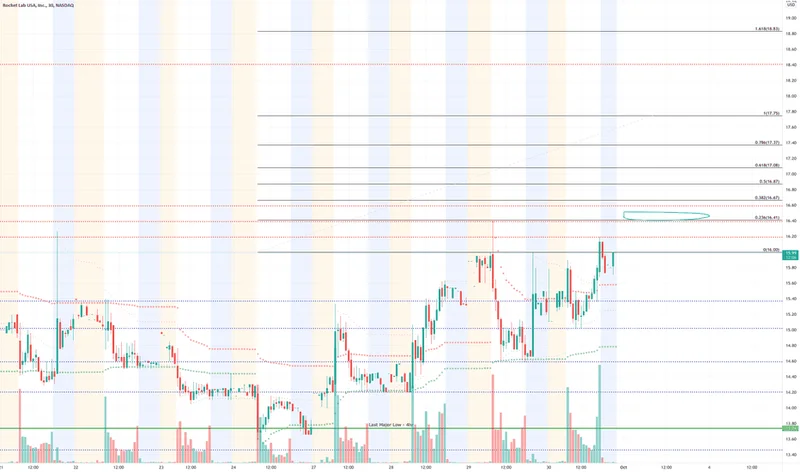
And because of the launch cadence Rocket Lab provides, this constellation isn't a static monument. It's a living, evolving system. Imagine what this means for agriculture, for disaster response, for monitoring shipping lanes, for tracking deforestation—we're talking about a living, breathing digital twin of Earth, updated not yearly or monthly, but almost hourly, and that capability is being unlocked by the sheer, unglamorous reliability of launch. The stock market gets it; Rocket Lab’s shares jumped over 7% on the news, as detailed in reports like Why Is Rocket Lab Stock Surging Wednesday? - Rocket Lab (NASDAQ:RKLB) - Benzinga. But the financial charts only tell a fraction of the story.
The real story is about building a nervous system for our planet. When a tsunami is forming, we’ll see it. When a wildfire sparks in a remote forest, we’ll know. When illegal fishing operations are underway in protected waters, they’ll have nowhere to hide. This isn't science fiction; it's the infrastructure being assembled right now, one Electron launch at a time from a quiet pad in New Zealand.
Of course, with this new god's-eye view comes immense responsibility. This kind of power to observe demands an equal measure of wisdom and ethical foresight. Who owns this data? How do we ensure it's used to connect and protect us, not to surveil and control us? These aren't technical questions; they're deeply human ones, and we need to start having those conversations with the same urgency that we're building the hardware. If we can see a problem with perfect clarity, what is our moral obligation to act on that information?
This is the paradigm shift. We’re moving from exploration to utilization. For decades, space was a destination. Now, it’s becoming a utility, a tool, a part of our daily global infrastructure, as vital as the internet or the power grid. And it’s all happening because companies like Rocket Lab decided to stop building cathedrals and start building an assembly line to the stars.
The New Rhythm of Progress
What this contract truly represents is the normalization of space. It’s the moment the extraordinary begins its slow, steady march toward the ordinary. And that is the most exciting thing I can possibly imagine. Because when access to orbit becomes a given, the genius of millions is unleashed. We can’t even begin to predict what will be built when the cost of a launch is no longer the single biggest hurdle for a startup with a world-changing idea. We’re on the cusp of that era, and this steady stream of rockets is the pulse of its arrival.

- Search
- Recently Published
-
- Duke Energy: What's Really Going On?
- Value City Furniture: Are they finally going out of business? The bankruptcy talk.
- Scott Bessent: Who Is This Guy, The Trump Whispers, And What Are They Not Telling Us?
- American Signature Files Chapter 11: What Happened?
- Tesla Ride-Hail in Arizona: What This Means for the Future of Mobility
- OECD: What it is, and its AI Data Focus
- Nebius: Stock, Coreweave, & Nvidia – What's the Real Deal?
- Bitcoin: Beyond the Headlines, What This Moment Truly Signals
- Social Security Retirement: The Realities of Your Payouts and How to Plan
- Starlink Satellites: How Many Are Really Up There, Where They're Hiding, & What's The Actual Point?
- Tag list
-
- carbon trading (2)
- financial innovation (2)
- blockchain technology (2)
- carbon tokens (2)
- Blockchain (11)
- Decentralization (5)
- Smart Contracts (4)
- Cryptocurrency (26)
- DeFi (5)
- Bitcoin (29)
- Trump (5)
- Ethereum (8)
- Pudgy Penguins (5)
- NFT (5)
- Solana (7)
- cryptocurrency (6)
- XRP (3)
- Airdrop (3)
- MicroStrategy (3)
- Stablecoin (3)
- Digital Assets (3)
- PENGU (3)
- Aster (8)
- Zcash (6)
- iren stock (3)