Apple (AAPL) Stock: A Data-Driven Look at Its Performance vs. NVDA, MSFT, and TSLA
The initial reaction was the correct one.
When Apple’s fiscal Q4 2025 earnings hit the wire, the market’s first instinct was to sell. The stock dipped roughly 3% in the moments after the release. That response was logical, data-driven, and entirely defensible. The company’s cash cow, the iPhone, had missed revenue estimates, coming in at $49.02 billion against an expected $49.33 billion. More critically, sales in the Greater China region fell 4% year-over-year, a significant miss in a market that is supposed to be a pillar of growth.
But then, something shifted. Within the hour, the stock wasn't just recovering; it was soaring, up 5% in after-hours trading. This reversal wasn't driven by a sudden recalculation of the quarterly results. It was driven by a story. The market, in a remarkable pivot, chose to ignore the numbers on the page in favor of the narrative being spun on the analyst call. And that’s where the real risk for investors now lies.
The Anatomy of a Mismatch
Let’s be clinical about the reported numbers. On the surface, the headlines looked solid. As one Apple earnings recap: Stock rises 5% on earnings beat but China revenue declines noted, total revenue grew 8% to $102.5 billion, beating estimates. Earnings per share rose 13% to $1.85, also a beat. For an algorithm scanning for green flags, this was enough. But the quality of that beat is where the picture gets murky.
The core of Apple is, and for the foreseeable future remains, the iPhone. A miss in this segment, however small, is an operational failure that cannot be papered over by strength elsewhere. CEO Tim Cook was quick to praise the new iPhone 17, noting it was "resonating around the world," but this feels like a qualitative distraction from a quantitative shortfall. The device had only about a week of sales recorded in these results, making its impact statistically minor. So why did the flagship product line underperform?
The China problem is even more acute. Cook attributed the 4% decline to a "supply constraint," a familiar refrain used to deflect from potential demand issues. But is it credible? After years of optimizing its global supply chain, are we to believe that Apple couldn't adequately stock one of its most critical markets for a flagship launch? Or is it more plausible that competitive pressures from domestic rivals and a cooling consumer economy are finally taking their toll? The data isn't definitive, but the question is one that management seemed eager to sidestep.
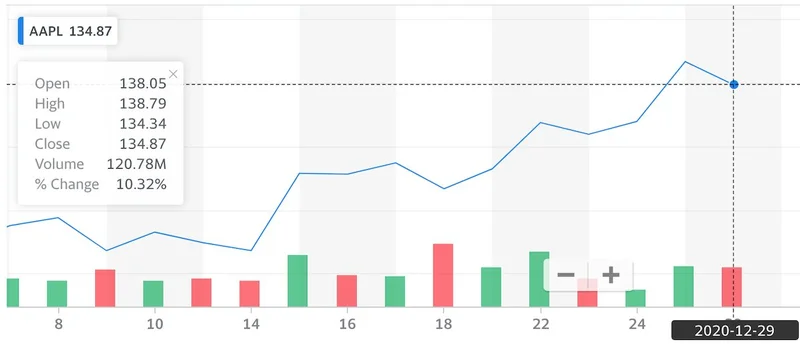
This is the part of the report that I find genuinely puzzling. The market saw a miss in the most important product segment and a decline in the most important growth region, and after a brief, rational sell-off, decided it didn't matter. It’s a fascinating, if unsettling, display of sentiment overpowering data.
The Pivot from Data to Narrative
The engine behind the stock’s reversal was the forward guidance provided during the earnings call. This is where Apple’s management performed a masterclass in shifting the market’s focus from the past to the future, as reports noted that Apple sees big December quarter driven by strong iPhone 17 demand.
CFO Kevan Parekh projected that total revenue for the holiday quarter would increase by an astonishing 10-12% year-over-year, a figure well above Wall Street’s expectations. He added that iPhone sales were expected to grow by double digits. This wasn't just guidance; it was a promise of a blowout, what Parekh himself suggested could be their "best quarter ever." The market, starved for growth in a tepid tech landscape, devoured it.
This is the equivalent of a poker player showing a weak hand but betting the entire pot on the final card to be dealt. The current quarter’s results (the weak hand) were brushed aside in favor of the immense promise of the next quarter (the river card). The rally wasn't a vote of confidence in Apple’s Q4 performance; it was a highly leveraged bet that this guidance will materialize without a hitch.
Adding to the narrative was the talk of artificial intelligence. Apple announced plans to increase its capital expenditure to expand AI investments, a clear signal that it's trying to shed its reputation as an AI laggard. Cook even suggested the company is "making good progress" on its delayed, overhauled Siri. Yet, these are long-term investments, not immediate revenue drivers. They are necessary expenses to catch up, and for now, they represent a drain on margins before they contribute a penny to the bottom line. The market is pricing in the success of Apple's AI strategy before it has even been fully deployed, let alone proven effective.
A Price Untethered from Performance
Ultimately, we are left with a significant discrepancy. Apple’s stock is trading at a forward price-to-earnings multiple that has expanded to 33.5x, a valuation that demands near-flawless execution. Yet the Q4 report was demonstrably flawed. It contained a miss in its core product and a decline in its key growth market.
The subsequent rally was an emotional reaction to a well-crafted corporate narrative. It reflects a belief in a story—a story of a record-breaking holiday season, of an AI comeback, and of supply chains, not demand, being the source of all weakness. While that story is compelling, it is not yet data. The current `aapl stock price` is not a reflection of Q4 results; it is the physical embodiment of the market’s hope for Q1. For a company valued at over $4 trillion, that is a very expensive bet on faith.

- Search
- Recently Published
-
- Duke Energy: What's Really Going On?
- Value City Furniture: Are they finally going out of business? The bankruptcy talk.
- Scott Bessent: Who Is This Guy, The Trump Whispers, And What Are They Not Telling Us?
- American Signature Files Chapter 11: What Happened?
- Tesla Ride-Hail in Arizona: What This Means for the Future of Mobility
- OECD: What it is, and its AI Data Focus
- Nebius: Stock, Coreweave, & Nvidia – What's the Real Deal?
- Bitcoin: Beyond the Headlines, What This Moment Truly Signals
- Social Security Retirement: The Realities of Your Payouts and How to Plan
- Starlink Satellites: How Many Are Really Up There, Where They're Hiding, & What's The Actual Point?
- Tag list
-
- carbon trading (2)
- financial innovation (2)
- blockchain technology (2)
- carbon tokens (2)
- Blockchain (11)
- Decentralization (5)
- Smart Contracts (4)
- Cryptocurrency (26)
- DeFi (5)
- Bitcoin (29)
- Trump (5)
- Ethereum (8)
- Pudgy Penguins (5)
- NFT (5)
- Solana (7)
- cryptocurrency (6)
- XRP (3)
- Airdrop (3)
- MicroStrategy (3)
- Stablecoin (3)
- Digital Assets (3)
- PENGU (3)
- Aster (8)
- Zcash (6)
- iren stock (3)