NV Energy's New Rate Structure: Analyzing the Peak Demand Charge and Its Legality
NV Energy’s Rate Hike Rests on a Questionable Legal Foundation
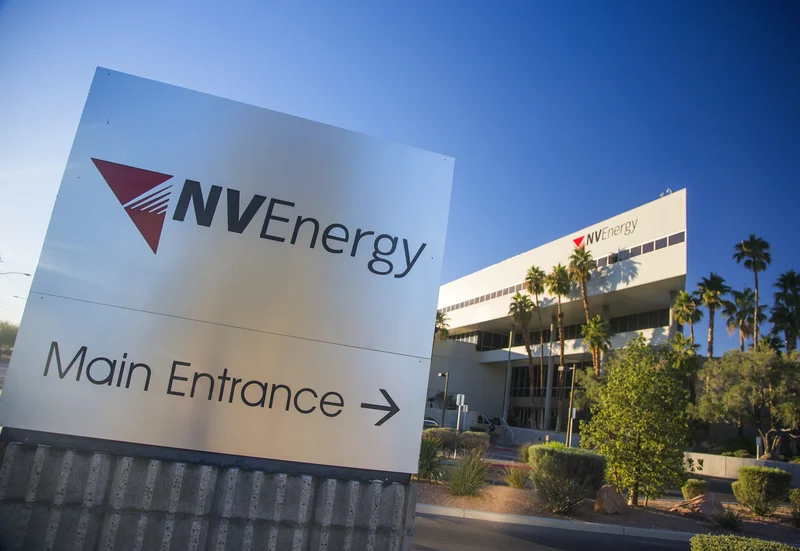
A regulator’s primary function is to interpret and enforce the law within a specific framework. Yet, in Nevada, the Public Utilities Commission (PUC) appears to have approved a rate structure for NV Energy that stands in direct opposition to the state laws it is bound to uphold. The resulting $119 million rate hike, now facing a petition for reconsideration, isn’t just a matter of dollars and cents; it’s a case study in regulatory overreach resting on a foundation that looks suspiciously weak.
The Nevada Attorney General’s Bureau of Consumer Protection (BCP) has filed a challenge, and the core of its argument is remarkably straightforward. It points to black-and-white text in Nevada state law and contrasts it with the PUC’s own order. The discrepancy is not subtle. At the center of the dispute is a new “peak demand charge,” a mechanism that allows NV Energy to bill residential and small business customers a higher rate based on their single highest 15-minute period of energy consumption during a month.
This is where the logic begins to fray. Nevada law explicitly prohibits the PUC from approving a rate that “requires a residential customer to purchase electric service at a rate which is based on the time of day…unless the customer chooses to do so.” The key word here is requires. This is a mandatory charge, not an opt-in program. The BCP, in its petition, simply quotes the commission’s own justification back at it, noting the PUC’s order states the demand charge “‘varies based on the time during which the electricity is used.’”
It’s a direct, almost brazen, contradiction. The PUC’s defense? It cited the “uniqueness of the circumstances in Nevada” to justify its decision. I've looked at hundreds of regulatory filings, and this kind of qualitative, vague rationale is often a red flag. It’s a justification that sidesteps quantitative analysis in favor of a narrative. What, precisely, is so unique about Nevada’s grid that it requires a mandatory rate structure that is not only untested but also illegal in any other context? And why is Nevada the only state where an investor-owned utility would mandate such a charge? These are the questions that the PUC’s one-line defense fails to answer.
The Solar Equation Gets a Rewrite
The legal issues compound when you examine the impact on rooftop solar customers. A separate Nevada law prevents utilities from levying any “fee or charge that is different than that charged to other customers” on those who generate their own power. By imposing a mandatory demand charge, the PUC’s order arguably violates this statute as well, creating a double legal jeopardy.
But the PUC didn’t stop there. It also approved a fundamental change to the net metering calculus for new rooftop solar customers in Northern Nevada. Previously, NV Energy credited solar owners for the excess energy they sent back to the grid on a monthly basis. The new rule changes this calculation to 15-minute intervals.
To understand the impact, imagine your bank account. A monthly calculation is like getting interest on your average daily balance over 30 days. The 15-minute interval is like the bank checking your balance every quarter-hour and only crediting you based on the lowest points, effectively ignoring the periods where you had more money deposited. It’s a structural change designed to reduce the value of the credits. The expected impact is an increase of about $11 a month—or, to be more precise, it’s a significant extension of the payback period on a multi-thousand-dollar solar investment, altering the core financial proposition for consumers.
NV Energy’s rationale is that non-solar customers are subsidizing their solar-generating neighbors to the tune of $50 million a year. This is the utility’s number, of course. And while there’s certainly a complex debate to be had about cost-shifting in the energy transition, using an unverified, company-provided figure to justify a rate change that appears to violate state law (specifically, 2017’s Assembly Bill 405, which the BCP argues requires monthly calculations) is a questionable analytical leap.
And this is the part of the case that I find genuinely puzzling. Regulators are supposed to be the arbiters, the umpires calling balls and strikes according to a pre-written rulebook. Here, it seems the umpire has decided to invent a new rule because one team argued the game was unfair. The public response, described by the BCP as “vehemently negative, confounding and filled with fear of rate-shock,” is a predictable outcome when the rules no longer seem to apply.
The matter is now headed for a hearing on November 18. Jon Wellinghoff, a former chairman of the Federal Energy Regulatory Commission, has stated bluntly that “The BCP is dead right legally on this one,” as reported in the NV Energy peak demand charge, tweak to net metering, violate state law, say experts • Nevada Current. That’s a powerful assessment. Yet, insiders like the recently retired David Chairez of the BCP are skeptical the commission will reverse itself. His prediction is that the PUC will simply try to “harden” its order for the inevitable court battle. If that’s the strategy, it tells you everything you need to know. It suggests the goal isn't legal compliance, but litigation endurance.
The Justification Lacks a Data Set
Ultimately, this isn't a debate over complex energy modeling; it's a conflict between clear legislative text and a regulator's desire for a specific outcome. The PUC's argument for the "uniqueness" of Nevada is an assertion without evidence, a narrative without numbers. The BCP's counter-argument, by contrast, is grounded in the unambiguous language of state statutes. When a regulatory body ignores the plain text of the law, it undermines the predictability and stability that markets—and consumers—rely on. The upcoming hearing may be a formality, but the real test will come when this decision faces judicial review, where vague justifications rarely hold up against the hard reality of the law.

- Search
- Recently Published
-
- Duke Energy: What's Really Going On?
- Value City Furniture: Are they finally going out of business? The bankruptcy talk.
- Scott Bessent: Who Is This Guy, The Trump Whispers, And What Are They Not Telling Us?
- American Signature Files Chapter 11: What Happened?
- Tesla Ride-Hail in Arizona: What This Means for the Future of Mobility
- OECD: What it is, and its AI Data Focus
- Nebius: Stock, Coreweave, & Nvidia – What's the Real Deal?
- Bitcoin: Beyond the Headlines, What This Moment Truly Signals
- Social Security Retirement: The Realities of Your Payouts and How to Plan
- Starlink Satellites: How Many Are Really Up There, Where They're Hiding, & What's The Actual Point?
- Tag list
-
- carbon trading (2)
- financial innovation (2)
- blockchain technology (2)
- carbon tokens (2)
- Blockchain (11)
- Decentralization (5)
- Smart Contracts (4)
- Cryptocurrency (26)
- DeFi (5)
- Bitcoin (29)
- Trump (5)
- Ethereum (8)
- Pudgy Penguins (5)
- NFT (5)
- Solana (7)
- cryptocurrency (6)
- XRP (3)
- Airdrop (3)
- MicroStrategy (3)
- Stablecoin (3)
- Digital Assets (3)
- PENGU (3)
- Aster (8)
- Zcash (6)
- iren stock (3)