Trump Pardons Binance Founder: The Pardon, the Charges, and What We Know Now
The Anatomy of a Transactional Pardon
The official statement from the Trump White House was an exercise in political branding. The news that Trump pardons founder of Binance, world’s largest crypto exchange, was framed as the definitive end to the “Biden administration’s war on cryptocurrency.” It’s a clean, simple narrative. It’s also a significant misrepresentation of the data.
When you strip away the rhetoric, the facts of the case against Zhao and Binance are not about a philosophical opposition to digital assets. They are about fundamental failures in financial compliance. Zhao pleaded guilty in late 2023 to a felony charge: failing to maintain an effective anti-money laundering (AML) program. This wasn’t a minor oversight. The plea was part of a settlement where Binance, the company he built, agreed to pay a staggering $4.3 billion penalty. Companies don’t pay that kind of money over a simple disagreement in regulatory interpretation.
The Department of Justice’s case alleged that Binance failed to report over 100,000 suspicious transactions to authorities. These weren’t just ambiguous trades; they included transactions with designated terrorist groups like al-Qaida and Hamas. To frame this as a “war on crypto” is like calling a bank robbery prosecution a “war on currency.” The medium of exchange is irrelevant when the underlying action is a clear violation of established financial law. Yet, the President dismissed the entire affair, stating, “A lot of people say that he wasn’t guilty of anything... what he did was not even a crime.”
This presents a logical discrepancy. If the actions were not criminal, why the guilty plea? Why the $4.3 billion settlement? The President’s claim that Zhao was “persecuted” simply doesn’t align with the documented legal record, which includes a confession and one of the largest corporate penalties in U.S. history. The narrative requires us to ignore the numbers, and as an analyst, that’s something I’m unwilling to do. The pardon wasn’t the end of a war; it looks more like the closing of a ledger. The real question isn't about crypto ideology, but about what, exactly, was being transacted.
Following the Balance Sheet
To understand this pardon, you can’t look at the law books. You have to follow the money. And the money trail leads directly to the Trump family’s own burgeoning crypto empire, World Liberty Financial.
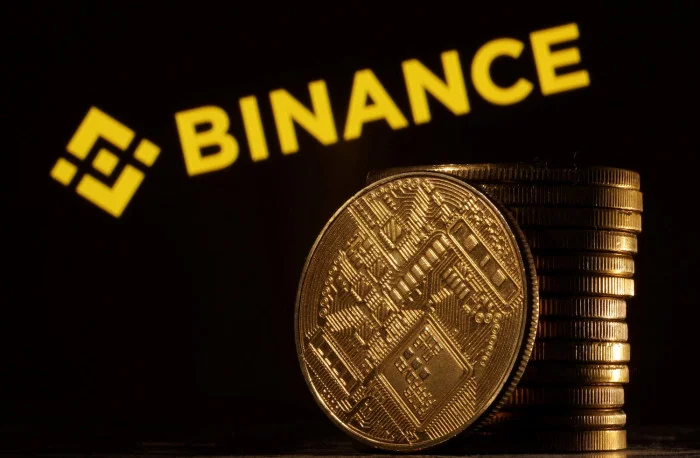
The connection isn't subtle. Earlier this year, a critical event occurred that provided immense legitimacy and liquidity to the Trump family’s enterprise. An Emirati investment fund, MGX, made a $2 billion investment into Binance. The mechanism of this transaction is the key. The payment was executed using a cryptocurrency developed by World Liberty Financial. This single move was a masterstroke for the firm, instantly elevating their proprietary digital currency from a speculative asset to the backing for a multi-billion-dollar institutional deal. It’s the kind of validation that crypto ventures spend years and fortunes trying to achieve.
And this is the part of the financial arrangement that I find genuinely puzzling. In institutional finance, you use established, highly liquid instruments for transactions of this magnitude—typically USD, Treasuries, or perhaps a deeply trusted stablecoin like USDC. Using a nascent, politically-connected family token is a significant outlier. It introduces unnecessary risk unless the primary objective isn't financial efficiency, but something else entirely. What was the premium being paid for using the Trump family’s token? And was that premium paid back with a presidential pardon?
The White House statement, of course, makes no mention of this. President Trump himself claimed, “I don’t know him. I don’t believe I’ve ever met him,” when asked about Zhao. This may be true (direct contact is rarely necessary in these arrangements), but it sidesteps the material financial entanglement. The pardon came just months after the Binance-MGX deal that was so lucrative for his family’s business. The correlation is, at a minimum, glaring. It’s a classic quid pro quo dressed up in the language of political liberation. The pardon isn't an act of mercy; it's a return on investment.
This entire sequence has transformed Binance’s position. Once barred from operating in the US, with its founder serving a prison sentence—to be more exact, four months—the company is now positioned for a triumphant return. The SEC dropped its suit against the company shortly after Trump’s inauguration, and now its founder is a free man. For a company that once saw the US market as its biggest liability, it now has a direct line to the top. The question for other players in the space, from giants like Coinbase to other exchanges like Kraken, is what this new landscape means. Is regulatory compliance now secondary to political patronage?
A Quid Pro Quo, Quantified
Let’s be precise. This wasn’t about justice, ideology, or ending a fictitious “war on crypto.” The data points to a straightforward, if audacious, transaction. The asset exchanged was a $2 billion deal structure that funneled legitimacy and value into the Trump family’s private crypto venture. The payment rendered for that asset was a presidential pardon, clearing the name of a convicted felon and wiping a $4.3 billion slate clean. The pardon wasn't a political act; it was a financial settlement. The numbers don't just suggest this conclusion; they scream it.

- Search
- Recently Published
-
- Duke Energy: What's Really Going On?
- Value City Furniture: Are they finally going out of business? The bankruptcy talk.
- Scott Bessent: Who Is This Guy, The Trump Whispers, And What Are They Not Telling Us?
- American Signature Files Chapter 11: What Happened?
- Tesla Ride-Hail in Arizona: What This Means for the Future of Mobility
- OECD: What it is, and its AI Data Focus
- Nebius: Stock, Coreweave, & Nvidia – What's the Real Deal?
- Bitcoin: Beyond the Headlines, What This Moment Truly Signals
- Social Security Retirement: The Realities of Your Payouts and How to Plan
- Starlink Satellites: How Many Are Really Up There, Where They're Hiding, & What's The Actual Point?
- Tag list
-
- carbon trading (2)
- financial innovation (2)
- blockchain technology (2)
- carbon tokens (2)
- Blockchain (11)
- Decentralization (5)
- Smart Contracts (4)
- Cryptocurrency (26)
- DeFi (5)
- Bitcoin (29)
- Trump (5)
- Ethereum (8)
- Pudgy Penguins (5)
- NFT (5)
- Solana (7)
- cryptocurrency (6)
- XRP (3)
- Airdrop (3)
- MicroStrategy (3)
- Stablecoin (3)
- Digital Assets (3)
- PENGU (3)
- Aster (8)
- Zcash (6)
- iren stock (3)