Salesforce (CRM) Stock: Deconstructing the Latest Analyst 'Buy' Rating
The Two Clocks of Salesforce: Why Wall Street Sees a Rocket Ship and Investors See a Trap
There’s a dissonance in the air around Salesforce, a statistical hum that doesn’t quite resolve. On one side, you have the crisp, confident pronouncements from firms like Truist Securities, which on October 7th prompted headlines like Truist Securities Reiterates Buy Rating on Salesforce (CRM) Stock and included a $400 price objective. Their thesis is clean, forward-looking, and predicated on the explosive potential of AI and data products to fuel growth well into FY 2027.
On the other side, you have a more cautious, almost weary sentiment emanating from certain pockets of the investment community. In its Q3 investor letter, Mar Vista Investment Partners articulated this anxiety, noting the stock’s pressure from concerns over agentic AI cannibalizing the company’s core Service Cloud and the slow monetization of these new AI offerings. They didn't use the term lightly, but it hangs in the air: "value trap."
So, which is it? A growth catalyst on the verge of ignition or a value trap masquerading as innovation? The answer, I believe, lies in the fact that the bulls and the bears are looking at two entirely different clocks. One is measuring past performance with impeccable precision. The other is trying to measure a future that hasn't been invented yet. And this is where the discrepancy in valuation emerges.
The Rear-View Mirror Is Flawless
If you were to judge Salesforce solely on its recent operational execution, the bull case is almost unassailable. The company’s performance is a masterclass in mature tech discipline. The Q2 2026 results were a clean sweep, surpassing internal targets on every key metric: revenue, margin, cash flow, and current Remaining Performance Obligations (cRPO). This wasn't a fluke. It marked the 10th consecutive quarter of operating margin expansion. A decade of quarters. That isn't luck; it's a system.
And I've looked at hundreds of these quarterly reports from tech giants, and this particular kind of consistent, incremental margin improvement is unusual. It signals a company that has reached a state of operational grace, capable of squeezing efficiency from every corner of its vast enterprise. This is the foundation of its wide economic moat, a fortress built not just on network effects but on deeply embedded customer switching costs. Leaving Salesforce isn't just a software decision; for many clients, it's a corporate restructuring.
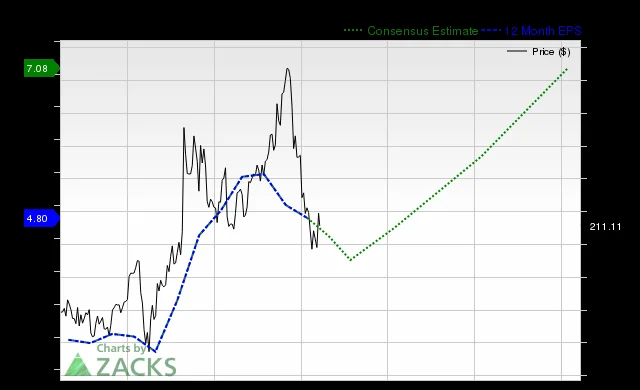
The bulls at Truist see this operational powerhouse and are layering an explosive new variable on top of it: AI. The numbers, at first glance, support this optimism. The company’s data cloud and AI annual recurring revenue (ARR) just crossed the $1.2 billion mark, a figure that represents a 120% year-over-year increase. Let me be more precise, the reported growth was just over 120%. A number like that is designed to catch your attention, and it does. It suggests a new engine is not only being built but is already firing on all cylinders. This is the clock of proven performance, and every tick is a reaffirmation of strength.
The Cannibalization Conundrum
The problem is that the "value trap" argument isn't about the past. It’s a hypothesis about the future, one that questions the very nature of that impressive-looking $1.2 billion in AI revenue. The core fear, as articulated by Mar Vista, is cannibalization. Is this new AI revenue truly accretive, or is it simply a reallocation of existing customer budgets from one Salesforce product line to another? Specifically, will "Agentforce" and other agentic AI tools render a significant number of human-powered Service Cloud seats redundant?
This is the central, terrifying question for which we have insufficient data. It’s like watching a master shipbuilder (Salesforce) construct a revolutionary, high-speed hydrofoil right next to its fleet of profitable, reliable container ships. The hydrofoil is faster, more efficient, and undeniably the future of transport. But what happens to the container ship business? Do you mothball it? Do you charge customers to switch, risking their departure to a rival shipyard? Or do you hope they’ll pay for both, a scenario that seems unlikely in a world of tightening IT budgets?
The $1.2 billion in AI ARR is a powerful headline, but its composition is opaque. We don't know the net impact on total customer spend. If a large enterprise client pays $5 million for new AI tools but reduces their Service Cloud spend by $4 million over the next 24 months, is that a win? The top-line AI number grows, but the total account value stagnates or even shrinks. That is the anatomy of a value trap: the appearance of growth that masks underlying decay. This is the forward-looking clock, and its hands are spinning in a fog of uncertainty. The bulls see the new revenue; the bears see the potential for a zero-sum game within Salesforce's own ecosystem.
A Tale of Two Timelines
Ultimately, the divergence between the $400 price target and the "value trap" label comes down to a fundamental disagreement about timelines. Truist is modeling a future where AI becomes a powerful, accretive layer on top of a stable core business—a seamless transition. The skeptics see a messier, more painful timeline, where the AI transition causes a period of internal disruption and value destruction before, or even if, it creates net new growth. My analysis suggests the market is underestimating the risk of the second scenario. The operational excellence is real and commendable, but it’s a lagging indicator. The strategic challenge of AI cannibalization is the leading indicator, and the data there is far from clear. Salesforce has proven it can run its existing machine flawlessly. It has yet to prove it can rebuild the machine while it’s still running.

- Search
- Recently Published
-
- Duke Energy: What's Really Going On?
- Value City Furniture: Are they finally going out of business? The bankruptcy talk.
- Scott Bessent: Who Is This Guy, The Trump Whispers, And What Are They Not Telling Us?
- American Signature Files Chapter 11: What Happened?
- Tesla Ride-Hail in Arizona: What This Means for the Future of Mobility
- OECD: What it is, and its AI Data Focus
- Nebius: Stock, Coreweave, & Nvidia – What's the Real Deal?
- Bitcoin: Beyond the Headlines, What This Moment Truly Signals
- Social Security Retirement: The Realities of Your Payouts and How to Plan
- Starlink Satellites: How Many Are Really Up There, Where They're Hiding, & What's The Actual Point?
- Tag list
-
- carbon trading (2)
- financial innovation (2)
- blockchain technology (2)
- carbon tokens (2)
- Blockchain (11)
- Decentralization (5)
- Smart Contracts (4)
- Cryptocurrency (26)
- DeFi (5)
- Bitcoin (29)
- Trump (5)
- Ethereum (8)
- Pudgy Penguins (5)
- NFT (5)
- Solana (7)
- cryptocurrency (6)
- XRP (3)
- Airdrop (3)
- MicroStrategy (3)
- Stablecoin (3)
- Digital Assets (3)
- PENGU (3)
- Aster (8)
- Zcash (6)
- iren stock (3)