QCOM Stock: Price Fluctuations and Nvidia's Shadow
Qualcomm's AI Gamble: Can QCOM Stock Price Justify the Hype?
Alright, let's dive into this Qualcomm situation. QCOM stock is making headlines, and as usual, there's a lot of noise to filter. The core question: is this AI push a genuine transformation, or just clever marketing layered on top of a solid, but not revolutionary, business?
Decoding the AI Narrative
Qualcomm is trying to position itself as an AI player, specifically in the realm of "inference" – running AI models on devices, rather than training them in data centers. They're touting their new AI200 and AI250 accelerator systems. The claim is that these chips will let Qualcomm compete with the likes of Nvidia (NVDA) and AMD (AMD) in the AI space, particularly in edge computing.
Here's where the data gets interesting. Qualcomm's argument hinges on "low-power, high-efficiency design." They're betting that the future of AI is in deployment, not just development. Humain AI (Saudi Arabia) has already committed to large-scale deployment, which is a definite win for the business line. It's a compelling narrative, but I want to see the numbers. How much revenue are we really talking about here? What's the projected ROI for these new AI chips? The reports are pretty vague.
One thing that's worth noting is that analysts are split pretty evenly on the stock. The consensus is a "Moderate Buy," with an average price target of $184.41. JPMorgan Chase recently increased their target to $210, while Mizuho decreased theirs to $185. Rosenblatt is the most bullish, with a $225 target. UBS Group is the outlier at $165. What's driving this massive discrepancy? Is it just different models, or are they looking at entirely different datasets?
Insider Activity and Institutional Moves
Now, let's talk about insider trading. This is always a juicy data point. Over the last 90 days, insiders have sold a total of 163,169 shares, worth almost $27 million. That's a significant amount. CEO Cristiano Amon sold 150,000 shares alone, for about $24.8 million. CAO Patricia Grech sold a smaller chunk (273 shares), but it represented a 40% decrease in her holdings.
Why are insiders selling? Is it just profit-taking, or do they know something we don't? It's tough to say for sure, but it's definitely a red flag. I've looked at hundreds of these filings, and while insider sales aren't always indicative of trouble, the scale of these sales is hard to ignore.
On the institutional side, the picture is mixed. 1,229 institutional investors increased their positions in QCOM, while 1,347 decreased them. It's a near-even split. This suggests there's no clear consensus among the big players. Some are buying into the AI narrative, while others are taking profits or hedging their bets.
One thing that particularly bothers me is the lack of context around these institutional moves. We know that they bought or sold, but not why. What were their motivations? What data were they looking at? Without that information, it's hard to draw any meaningful conclusions.
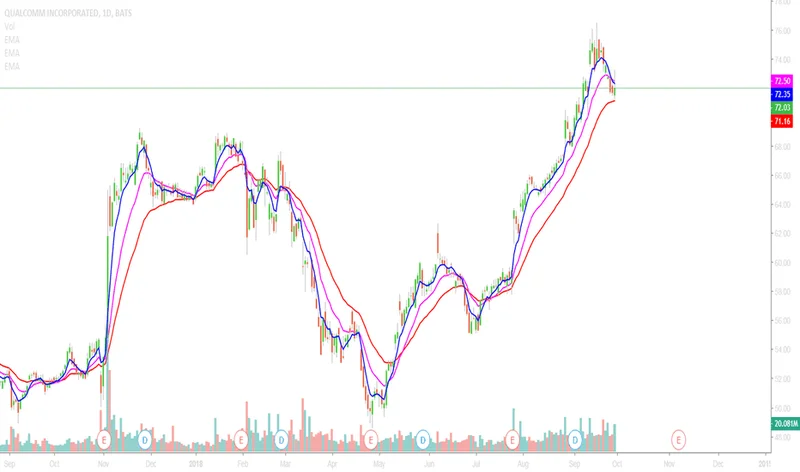
The stock price itself took a hit recently, falling 4.4% on Tuesday. Volume was up 40% compared to the average, suggesting there was some significant selling pressure. The stock traded as low as $172.29 before closing at $172.84. This drop seems to correlate with the analyst downgrades from Mizuho and UBS, but correlation doesn't equal causation. (As any data analyst knows, you need more than a single data point to establish a trend.) According to QUALCOMM (NASDAQ:QCOM) Shares Down 4.4% - Here's Why, the stock's decline reflects broader market concerns.
Questioning the Methodology
Before we get too carried away with the numbers, let's take a step back and think about how this data is being collected. These "analyst ratings" – where are they coming from? Who are these analysts, and what's their track record? Are they truly independent, or are they influenced by their firms' relationships with Qualcomm?
Similarly, the data on insider trading is based on self-reported filings. Are insiders always completely transparent? Are there ways they can legally circumvent the reporting requirements? These are important questions to consider when evaluating the reliability of the data.
Qualcomm's valuation is another point of contention. It's trading at about 18x GAAP trailing earnings, which is below the semiconductor sector median. However, on a price-to-sales basis, it's slightly above the median. Which metric is more relevant? It depends on your investment strategy. If you're a value investor, you might focus on earnings. If you're a growth investor, you might prioritize sales.
So, What's the Real Story?
Qualcomm's AI pivot is a compelling story, but the data is far from conclusive. There are too many conflicting signals and unanswered questions. The insider selling is concerning, the analyst ratings are all over the map, and the valuation is debatable. Until there's more concrete evidence to support the AI narrative, I'm staying on the sidelines.

- Search
- Recently Published
-
- Duke Energy: What's Really Going On?
- Value City Furniture: Are they finally going out of business? The bankruptcy talk.
- Scott Bessent: Who Is This Guy, The Trump Whispers, And What Are They Not Telling Us?
- American Signature Files Chapter 11: What Happened?
- Tesla Ride-Hail in Arizona: What This Means for the Future of Mobility
- OECD: What it is, and its AI Data Focus
- Nebius: Stock, Coreweave, & Nvidia – What's the Real Deal?
- Bitcoin: Beyond the Headlines, What This Moment Truly Signals
- Social Security Retirement: The Realities of Your Payouts and How to Plan
- Starlink Satellites: How Many Are Really Up There, Where They're Hiding, & What's The Actual Point?
- Tag list
-
- carbon trading (2)
- financial innovation (2)
- blockchain technology (2)
- carbon tokens (2)
- Blockchain (11)
- Decentralization (5)
- Smart Contracts (4)
- Cryptocurrency (26)
- DeFi (5)
- Bitcoin (29)
- Trump (5)
- Ethereum (8)
- Pudgy Penguins (5)
- NFT (5)
- Solana (7)
- cryptocurrency (6)
- XRP (3)
- Airdrop (3)
- MicroStrategy (3)
- Stablecoin (3)
- Digital Assets (3)
- PENGU (3)
- Aster (8)
- Zcash (6)
- iren stock (3)