Target's Bold Pivot: Why This Is More Than Just Layoffs—and What It Means for Us All
It’s a uniquely modern kind of horror, isn’t it? Finding out your entire professional world might be about to implode not from a manager, not from a formal email, but from the flickering, algorithm-fueled glow of a TikTok video. For some Target employees, that’s exactly how the news of 1,800 corporate job cuts landed. One minute you’re scrolling, the next you’re swept into a vortex of what an insider called “total panic.”
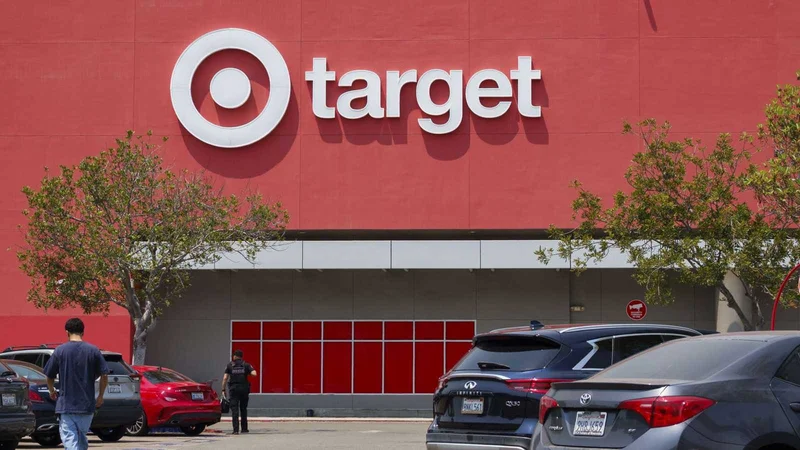
The official announcement from incoming CEO Michael Fiddelke came later, confirming the numbers: 1,000 people laid off, another 800 open positions vaporized. The company then made a curious, almost surreal request: all U.S. corporate staff were to work from home for the week. The official reasoning was about logistics. But the unofficial, whispered-in-Slack-channels theory felt far more plausible: it was to avoid the grim “optics” of laid-off employees carrying cardboard boxes out of the Minneapolis headquarters, a painful scene that played out a decade ago during their last major culling. Target's first major layoff in a decade: Incoming CEO Michael Fiddelke explains why company is firing 1,80 - The Economic Times
A quiet, empty headquarters. Thousands of people logging in from their kitchen tables, waiting for the digital axe to fall. This isn't just a story about layoffs. It’s a story about a system reaching a breaking point. And while the human cost is immediate and gut-wrenching, I believe what we're witnessing is something far more profound than a simple cost-cutting measure. This is the painful, messy, and absolutely necessary reboot of a legacy machine struggling to run modern software.
The Ghost in the Corporate Machine
The language a company uses in these moments is incredibly revealing. The CEO’s memo and the spokesperson’s follow-up weren’t filled with the usual dreary CFO-speak about “headwinds” and “shareholder value.” Instead, they used phrases like “reduce complexity,” “remove layers,” and, most tellingly, “rewire its organization.”
When I read the term “rewire,” I honestly just sat back in my chair, because that’s the language of systems engineering, not just human resources. It signals a recognition that the problem isn't just financial—it’s architectural.
Imagine Target’s corporate structure as a massive, sprawling piece of legacy code written decades ago. Over the years, every new initiative, every new department, every new layer of middle management was another patch, another line of code bolted onto the original. It worked, for a while. But now, it’s bloated. It’s buggy. The whole thing runs slow. Decisions get lost in an endless loop of approvals, and by the time an idea makes it through the system, the market has already moved on. This is the kind of breakthrough that reminds me why I got into this field in the first place—watching complex systems adapt or die.
You can’t just delete a few files to fix a problem like that. You have to go deep into the source code and fundamentally rewrite it. What does “complexity” really mean here? Is it redundant teams working on the same problem without knowing it? Is it a hierarchy so tall that market intelligence from the front lines dies of oxygen deprivation before it reaches the top? Is this painful purge an attempt to rip out all the tangled, inefficient wiring so the organization can finally think and act at the speed of its competitors?
A System Under Unbearable Load
This wasn’t a sudden decision. The pressure has been building for years. Four years of stagnant sales. A stock that has plummeted 30% this year alone, making it a cellar-dweller in the S&P 500. The company is being squeezed from all sides—by Walmart’s scale, Costco’s value, and Amazon’s terrifying, data-driven efficiency.
Amazon doesn’t have meetings to decide to lower the price on a popular brand of sneakers in Phoenix because a heatwave is coming. An algorithm does it instantly. That’s the competition. They are operating on a completely different clock speed, a cadence dictated by predictive analytics and logistics chains that optimize in real-time—it means the gap between a customer trend and a corporate response has to be hours, not quarters.
Against that backdrop, Target’s internal struggles, from the changing customer tastes away from its signature home goods to the recent public backlash over its DEI programs, aren’t separate issues. They are all symptoms of the same core disease: a system that has become too slow and too complex to adapt. They’re trying to flatten the hierarchy and remove layers—in simpler terms, they want the person with the data to be able to act on it, without needing to get six VPs to sign off on a PowerPoint deck.
This layoff, the first of its kind in a decade, feels less like a reaction to a bad quarter and more like a final, desperate admission that the old machine can no longer handle the load. The system is crashing, and the only option is a hard reset.
This Isn't a Downsize, It's a Recompile
Let’s be clear: the loss of 1,800 jobs is a human tragedy for every single person and family involved. Nothing can diminish that. But if we are to learn anything from this, we have to see it for what it truly is. This isn't just about saving money on salaries. This is about survival.
Target is attempting to recompile its entire corporate operating system. They are stripping out the legacy code, the redundant processes, and the bureaucratic bloat in the hope of creating something leaner, faster, and more responsive. It’s a brutal, painful process, but the alternative—slowly fading into irrelevance as nimbler competitors eat you alive—is far worse.
The great challenge for every established company in the 21st century is this: Can you rewire your organization for the speed of an AI-powered world before the world rewires you out of existence? Target is running that terrifying experiment in real-time, and we should all be paying very close attention.

- Search
- Recently Published
-
- Duke Energy: What's Really Going On?
- Value City Furniture: Are they finally going out of business? The bankruptcy talk.
- Scott Bessent: Who Is This Guy, The Trump Whispers, And What Are They Not Telling Us?
- American Signature Files Chapter 11: What Happened?
- Tesla Ride-Hail in Arizona: What This Means for the Future of Mobility
- OECD: What it is, and its AI Data Focus
- Nebius: Stock, Coreweave, & Nvidia – What's the Real Deal?
- Bitcoin: Beyond the Headlines, What This Moment Truly Signals
- Social Security Retirement: The Realities of Your Payouts and How to Plan
- Starlink Satellites: How Many Are Really Up There, Where They're Hiding, & What's The Actual Point?
- Tag list
-
- carbon trading (2)
- financial innovation (2)
- blockchain technology (2)
- carbon tokens (2)
- Blockchain (11)
- Decentralization (5)
- Smart Contracts (4)
- Cryptocurrency (26)
- DeFi (5)
- Bitcoin (29)
- Trump (5)
- Ethereum (8)
- Pudgy Penguins (5)
- NFT (5)
- Solana (7)
- cryptocurrency (6)
- XRP (3)
- Airdrop (3)
- MicroStrategy (3)
- Stablecoin (3)
- Digital Assets (3)
- PENGU (3)
- Aster (8)
- Zcash (6)
- iren stock (3)