CBD Explained: Benefits, Risks, and the THC Distinction
# Trump, CBD, and the Data That Doesn't Add Up
On Sunday, September 29th, the market received a new, unexpected signal. It wasn’t a jobs report or an inflation print. Trump posts video endorsing CBD for seniors. Researchers urge caution. By Monday morning, cannabis industry stocks were soaring. The market, as it so often does, reacted to the headline, not the fine print.
But when you dig into the fine print, a significant discrepancy emerges. This isn't a story about a potential new therapeutic breakthrough. It's a story about a billionaire, a trademarked brand of CBD gummies, and a set of health claims that appear to be, by any objective measure, completely untethered from the existing scientific data.
Imagine the scene: a professionally produced video, the kind designed to soothe and persuade. The lighting is soft, the message is simple. Hemp-derived CBD is a "game changer," we're told, a miracle solution for the aches, pains, and sleepless nights of America's elderly. The video, produced by the Commonwealth Project, even puts a number on it: 20% of seniors are supposedly already using CBD for pain, arthritis, and other ailments.
The industry, predictably, celebrated. The U.S. Hemp Roundtable called it a "seminal moment." The American Trade Association of Cannabis and Hemp voiced its support. Of course, they did. A federal subsidy for your product line is the kind of news that gets you a great quarterly earnings call. But my job isn't to analyze earnings calls. It's to analyze the underlying asset. And in this case, the asset appears to be far more speculative than the market's reaction would suggest.
The Financial Signal vs. The Scientific Noise
Let’s first map the flow of capital and influence, because the narrative begins there. The Commonwealth Project, the video's producer, was founded by Howard Kessler, a Palm Beach billionaire and Trump associate. Kessler's company, which funds the project, also happens to have trademarked a brand of CBD gummies specifically targeted at senior citizens. (This is a material fact that seems almost too perfect to be true, yet here we are).
So, we have a clear, direct line from a product to its potential subsidizer, facilitated by a political endorsement. This is the signal that drove the stock prices. It’s a powerful political and financial alignment. But what happens when you place this signal next to the scientific noise? The entire thesis begins to fall apart.
The core claim is that CBD benefits seniors by easing pain and improving sleep. It’s a compelling pitch. The problem is the evidence. In a 2025 study on neuropathic pain led by Meg Haney at Columbia University, researchers found that CBD was no more effective than a placebo. Let me repeat that: it performed on par with a sugar pill. I've looked at hundreds of clinical trial readouts, and a failure to outperform a placebo is the reddest of red flags. It's the data equivalent of a dead end.
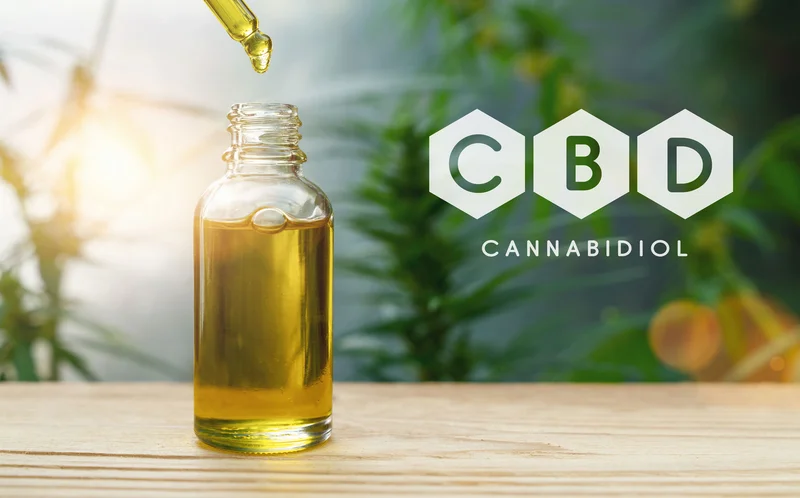
This endorsement is like attaching a rocket engine to a car that hasn't passed its basic safety inspection. The market sees the rocket and cheers for the potential speed, ignoring the high probability that the whole thing will fly apart on the launchpad. The FDA, the agency that would actually oversee this, seems to agree. It has approved exactly one CBD-based medication—for a severe and rare form of childhood epilepsy. For everything else, the agency warned in 2023 that Congress needed to create a new regulatory system to handle "potentially risky" CBD products. That warning was followed by FDA research in the summer of 2025 suggesting a risk of liver damage from the unregulated CBD flooding the market.
What level of due diligence, if any, was performed before this endorsement? Or is the proximity to a Palm Beach billionaire sufficient validation for a national health policy proposal?
A Question of Efficacy and Risk
The proponents will point to other studies, of course. They might mention the early research from the Icahn School of Medicine showing some promise for using CBD to treat opioid cravings. This is interesting, certainly, but "early research" and "some promise" are the watchwords of grant proposals, not a sound basis for a multi-billion-dollar Medicare expansion.
And this brings us to the most significant risk factor: drug interactions. Seniors are often on a cocktail of prescription medications. We have very little high-quality data on how a daily dose of unregulated CBD interacts with blood thinners, statins, or blood pressure medication. Proposing to subsidize broad use of a substance without this data is, to put it mildly, analytically reckless.
Then there’s that statistic from the video—that 20% of seniors are already using CBD. Where does this number come from? The video doesn't cite a source. Is it from a peer-reviewed epidemiological study or a marketing survey commissioned by a company that sells CBD gummies? Without a source and methodology, it's not data; it's an advertisement. For all we know, the real figure is closer to 19.8%—or, more likely, a much smaller number derived from a deeply biased sample.
The entire initiative feels inverted. The cart is not just before the horse; it’s in a different county. If the existing data is this weak, and the risks this ill-defined, why are we discussing Medicare coverage instead of funding the foundational research required to prove efficacy and safety first? The answer, it seems, has very little to do with science and everything to do with sales.
A Calculated Asymmetry
Let's be perfectly clear about what the data is telling us. This isn't a debate about public health policy. It is a textbook example of a calculated asymmetry of information and incentives. On one side, you have a powerful political figure, a connected billionaire, and a struggling industry all aligned to gain from a single policy change. The upside for them is immediate, tangible, and enormous. For Donald Trump, it's a talking point for a key demographic. For Howard Kessler, it's a potential federal subsidy for his consumer product. For the hemp industry, it’s a desperately needed lifeline.
On the other side are millions of seniors, who are being offered a product with unproven benefits and unknown risks as a "game changer." The entire proposition rests on the hope that CBD might work, while the most rigorous data available suggests it probably doesn't for its most commonly advertised purpose: pain relief. This isn't a speculative investment where the downside is merely financial. Here, the downside is measured in public health outcomes and wasted taxpayer dollars. The market may have cheered, but the numbers are screaming caution.

- Search
- Recently Published
-
- Duke Energy: What's Really Going On?
- Value City Furniture: Are they finally going out of business? The bankruptcy talk.
- Scott Bessent: Who Is This Guy, The Trump Whispers, And What Are They Not Telling Us?
- American Signature Files Chapter 11: What Happened?
- Tesla Ride-Hail in Arizona: What This Means for the Future of Mobility
- OECD: What it is, and its AI Data Focus
- Nebius: Stock, Coreweave, & Nvidia – What's the Real Deal?
- Bitcoin: Beyond the Headlines, What This Moment Truly Signals
- Social Security Retirement: The Realities of Your Payouts and How to Plan
- Starlink Satellites: How Many Are Really Up There, Where They're Hiding, & What's The Actual Point?
- Tag list
-
- carbon trading (2)
- financial innovation (2)
- blockchain technology (2)
- carbon tokens (2)
- Blockchain (11)
- Decentralization (5)
- Smart Contracts (4)
- Cryptocurrency (26)
- DeFi (5)
- Bitcoin (29)
- Trump (5)
- Ethereum (8)
- Pudgy Penguins (5)
- NFT (5)
- Solana (7)
- cryptocurrency (6)
- XRP (3)
- Airdrop (3)
- MicroStrategy (3)
- Stablecoin (3)
- Digital Assets (3)
- PENGU (3)
- Aster (8)
- Zcash (6)
- iren stock (3)