PepeNode's Virtual Mining Breakthrough: What It Is & Why It's a Game-Changer for Crypto
Pepenode Was Supposed to Be the Future of Meme Coins. What Went Wrong?
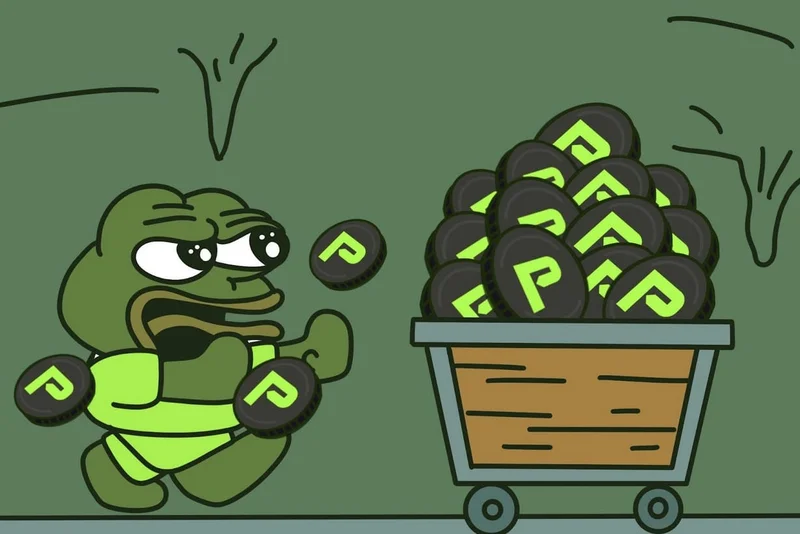
When I first read the Pepenode whitepaper, I honestly just sat back in my chair, a slow grin spreading across my face. Here it was. The spark. The kind of elegant, playful idea that reminds me why I got into this field in the first place. It promised to be the next evolutionary leap for meme coins—transforming them from simple, speculative jokes into dynamic, interactive ecosystems. The concept was beautiful: a "mine-to-earn" game where you build and upgrade virtual mining rigs to generate real tokens. It was a self-contained economic engine powered by fun.
This wasn't just another coin with a funny dog or a cartoon frog as its mascot. This was a system. A game with rules, strategy, and a deflationary heartbeat designed to reward engagement. Every time a player spent PEPENODE tokens to upgrade their virtual server room, 70% of those tokens would be permanently burned. This uses a deflationary mechanic—in simpler terms, every time you improve your virtual rig, a chunk of the currency vanishes forever, making everyone else's holdings a tiny bit more valuable. It’s a brilliant feedback loop that encourages participation while creating scarcity.
So, you have a clever concept, a gamified loop, and the cultural power of meme branding. On paper, it’s an absolute slam dunk. The perfect bridge between the chaotic fun of meme culture and the sustainable tokenomics of a serious project. It was supposed to be the future.
And yet, as we watch the presale numbers for Q4 2025 roll in, the story isn't matching the script. With nearly $2 million raised, Pepenode is doing respectably, but it’s being utterly eclipsed by a different kind of project. A competitor, BlockchainFX, has soared past $10.4 million in the same period, leading to headlines declaring that BlockchainFX Becomes the Best Crypto Presale of Q4 2025 as Pepenode and Coldware Struggle to Match Its $10.4M Surge. The market is speaking, and its message is brutally clear. What does it mean when a brilliant, futuristic idea gets left in the dust by something far more… practical?
A Tale of Two Futures
Let's break down what’s really happening here, because it’s not just about one project winning and another losing. We're witnessing a fundamental shift in what the market values. Pepenode is selling a dream. It’s a ticket to a future virtual world, a gamified reality where your strategic clicks generate wealth. It’s a fascinating concept, a digital ant farm that produces real value. But the key words are "future" and "virtual." The value is tied to a game that isn't live yet, an ecosystem that still exists primarily on a roadmap.
Now, look at BlockchainFX. It isn't selling a game. It's selling a tool. A decentralized, all-in-one platform where you can trade everything from crypto and stocks to forex and commodities from a single interface. This isn't a promise of future fun; it's a solution to a present-day headache. The platform is already in beta, and investors aren’t just buying a token; they’re buying into a working piece of infrastructure. Even more critically, they can stake their holdings and earn daily rewards paid out in USDT, a stablecoin. That’s not a hypothetical future yield; it's tangible, real-world value hitting their wallets now.
This shift is profound because it's not just about one project versus another, it's about a fundamental change in investor psychology where the allure of a future gamified world is being overshadowed by the immediate, tangible need for tools that simplify our chaotic digital financial lives right now. The market seems to be telling us that after years of dizzying hype cycles and broken promises, the appetite for speculative dreams is waning, replaced by a hunger for concrete utility. What can you do for me today? That's the question driving over $10 million in capital toward one project while the other struggles to keep pace.
Is this a sign that we've lost our imagination? Or is it something else entirely?
The Gravity of Now
I think what we're seeing is a maturation. It’s the crypto space growing up. Think back to the early days of the internet. We had a blast with silly GeoCities pages, dancing hamster GIFs, and novelty chat rooms. It was fun, chaotic, and experimental—much like the first wave of meme coins. But the companies that truly defined the era and built lasting value weren't the ones selling novelty. They were the ones building the tools and infrastructure the new world needed: the search engines, the payment processors, the e-commerce platforms.
Pepenode feels like a brilliant, next-generation GeoCities page. BlockchainFX feels like an early Amazon or PayPal. Both have their place, but one is building a business, and the other is building an experience. In a market still shaky from volatility, investors are choosing the business. They're choosing the tool over the toy.
This brings us to a crucial point about innovation and responsibility. It’s a moment of ethical consideration for every founder in this space. Is it enough to launch a project with a fantastic idea and a long-term roadmap? Or is there now an unspoken contract with the community to deliver tangible, real-world value from day one? The success of BlockchainFX suggests the latter. Its momentum is built on a foundation of existing utility, not just future potential.
This doesn’t mean there’s no room for visionary, game-changing ideas like Pepenode. But it does raise the bar. It tells us that to capture the market's imagination—and its capital—you need more than just a dream. You need a bridge from that dream to the user's reality, and that bridge needs to be open for traffic on day one. So, where does that leave a project like Pepenode? Does its slower traction mean the idea has failed?
Absolutely not. But it does mean its timing might be off. It’s a brilliant answer to a question the majority of the market isn't asking just yet.
The Dream Isn't Dead, It's Just Growing Up
Let's be perfectly clear: Pepenode’s struggle against its more utilitarian rivals isn’t a tragedy. It’s a vital sign. It’s evidence of a healthy, maturing ecosystem that is beginning to distinguish between fleeting novelty and foundational value. The lesson of 2025 isn't that gamified finance is a bad idea—it remains one of the most exciting frontiers we have. The lesson is that the market's center of gravity has shifted. Hype is no longer enough. A promise is no longer enough. The new king is tangible, immediate, undeniable utility. And honestly, that’s the most bullish signal I’ve seen in years. It means we’re finally moving from building castles in the sky to laying the foundations for a new economy on the ground.

- Search
- Recently Published
-
- Duke Energy: What's Really Going On?
- Value City Furniture: Are they finally going out of business? The bankruptcy talk.
- Scott Bessent: Who Is This Guy, The Trump Whispers, And What Are They Not Telling Us?
- American Signature Files Chapter 11: What Happened?
- Tesla Ride-Hail in Arizona: What This Means for the Future of Mobility
- OECD: What it is, and its AI Data Focus
- Nebius: Stock, Coreweave, & Nvidia – What's the Real Deal?
- Bitcoin: Beyond the Headlines, What This Moment Truly Signals
- Social Security Retirement: The Realities of Your Payouts and How to Plan
- Starlink Satellites: How Many Are Really Up There, Where They're Hiding, & What's The Actual Point?
- Tag list
-
- carbon trading (2)
- financial innovation (2)
- blockchain technology (2)
- carbon tokens (2)
- Blockchain (11)
- Decentralization (5)
- Smart Contracts (4)
- Cryptocurrency (26)
- DeFi (5)
- Bitcoin (29)
- Trump (5)
- Ethereum (8)
- Pudgy Penguins (5)
- NFT (5)
- Solana (7)
- cryptocurrency (6)
- XRP (3)
- Airdrop (3)
- MicroStrategy (3)
- Stablecoin (3)
- Digital Assets (3)
- PENGU (3)
- Aster (8)
- Zcash (6)
- iren stock (3)