Blood Plasma: Understanding Its Function and the Power of Donation
The Two Plasmas: One Pumps Trillions into the Future, The Other Pumps Life into the Present. What Happens When Their Worlds Collide?
I want you to hold two images in your mind.
In the first, picture a network of pure light. A digital circulatory system flashing with data, moving billions of dollars in an instant, powered by code and conviction. This is the world of Plasma, the Layer 1 blockchain that roared to life on September 25th. The numbers are almost comical in their scale. In a matter of days, it attracted $5.5 billion in value. Its native token, XPL, shot up over 87%. One trader, a so-called “whale,” reportedly netted over $80 million. This is a system built on a promise whispered by venture capitalist David Sacks and amplified into a rallying cry by its community: that stablecoins could unlock trillions of dollars in economic activity.
It’s a world of gasless transfers, of 10% yields on a neobank card you can use in 150 countries. It’s a world where a meme coin named “Trillions” can materialize, hit a $60 million valuation, and then recede like a digital tide. This is Plasma, the architecture of a new economy. It’s abstract, it’s lightning-fast, and it’s fueled by the belief in a radically more efficient financial future. When I first saw the on-chain data showing institutions and whales snapping up 20 million tokens before the launch, I honestly just sat back in my chair, speechless. The sheer conviction on display was a force of nature. This is the kind of breakthrough that reminds me why I got into this field in the first place.
Now, hold the second image.
Picture a clear, yellowish liquid. It’s not code; it's the very fluid of life, the component that makes up more than half of our blood. It carries cells, hormones, and proteins. It’s what we use to create life-saving medicines for immune disorders and trauma. This is the other plasma. The one that flows not on a mainnet, but in our veins.
This world doesn’t measure its success in market caps, but in lives saved. Its value isn’t abstract; it’s painfully, beautifully concrete. And this world had its own news cycle recently. 3M issued a recall for its Ranger Blood and Fluid Warming System—a device that warms up blood and plasma for transfusions—because at high flow rates, it couldn't keep the fluid warm enough, creating a risk of hypothermia. Thankfully, no one was hurt. But it’s a stark reminder of the physical stakes. In this world, a bug isn’t a patchable exploit; it’s a potential threat to a human body on an operating table.
What happens when the language of these two worlds collides? What do we see when the word “plasma” refers to both a Peter Thiel-backed blockchain and the life-giving product of a human donation?
We get a story about value. And we are forced to ask ourselves what, exactly, we think that word means.
The Great Refactoring: What Blood and Blockchains Reveal About Trust
The Human Ledger
Let’s go to Canada. There, a man named Peter Johnson donates his blood plasma. He does it, like so many others, out of a sense of civic duty, a desire to help. He believes his donation is a gift to a public system, managed by Canadian Blood Services, an organization born from the tainted blood crisis of the 1980s with a mandate to protect the national supply.
Then he learns about a deal. An agreement made with Grifols, a private, multinational pharmaceutical company based in Spain. The deal allows Grifols to take byproducts from donated Canadian plasma and use them to manufacture albumin, a protein product, for profitable sale on the global market. Tom Frankish, another donor, expressed his shock. They thought they were donating to Canada, not providing raw materials for a for-profit enterprise. The Canadian Health Coalition put it more bluntly, saying the deal “doesn’t pass the smell test” and raises alarms about transparency.
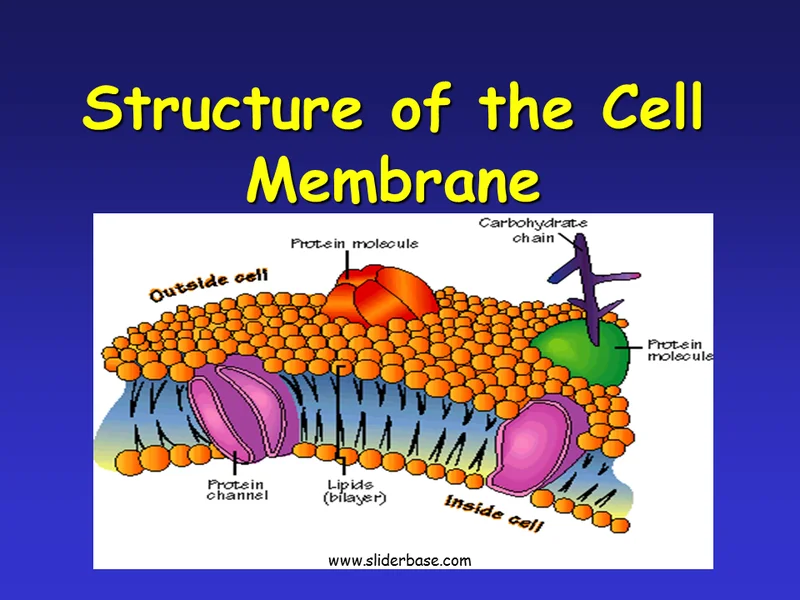
Now, juxtapose this with the world of the other Plasma. It’s a Layer 1 blockchain—in simpler terms, it’s a foundational digital infrastructure, like the base operating system for a new kind of internet of value. Its core selling point is radical transparency. Every transaction, every trade, every movement of its $5.5 billion in locked value is visible on a public ledger. The whale who made $80 million? We can see the trades. The $399 million in buy volume versus $363 million in sell? It’s all right there, recorded immutably on-chain.
One system, dealing with the literal fluid of life, is criticized for its opacity. The other, dealing with abstract digital tokens, is built on a bedrock of verifiable transparency.
This isn’t a criticism of the people working to save lives. It’s an observation about the systems we’ve built. We are living through a moment of systemic recalibration, a Great Refactoring of trust. It’s something akin to the invention of double-entry bookkeeping, which for the first time gave merchants a transparent, reliable way to understand their own financial health. It created a new language of commerce. Today, we’re seeing the birth of a new language for value itself and the speed of this is just staggering—it means the gap between how we organize our society today and how we could organize it tomorrow is closing faster than we can even comprehend.
This is where we must pause for a moment of profound responsibility. As we build these new systems, are we programming them with the right values? The Plasma blockchain can process a thousand transactions per second. But what is the value of those transactions? The “Trillions” meme coin is a fascinating experiment in collective belief, but its volatility is a reminder that hype is not the same as sustainable worth.
What could these two worlds, these two plasmas, teach one another?
Imagine if the transparency of the blockchain could be applied to the donation supply chain. What if a donor like Peter Johnson could see, on an immutable ledger, exactly where his donation went, how it was used, and the ultimate good it accomplished? What if the organizations involved were held to a new standard of public accountability, not by regulators alone, but by the elegant, irrefutable truth of a distributed ledger?
And what could the world of crypto learn from the quiet altruism of a plasma donor? The industry is rightly focused on building new rails for finance, banking the unbanked, and creating efficiency. But the story of the Canadian donors is a powerful reminder that the most profound value is often that which is given without expectation of financial return. It’s a call to build systems that serve not just markets, but communities. To create not just wealth, but well-being.
The collision of these two plasmas isn’t an accident. It’s a signal. It’s the universe handing us a perfect, if jarring, metaphor. We are being asked to decide what we want our future to be made of. Will it be built on opaque, legacy systems that obscure the flow of value? Or will we embrace a new paradigm of transparency and accountability, one that can power both a trillion-dollar stablecoin economy and a more trustworthy system for sharing the very gift of life itself?
Which plasma will you choose to build with?
The Code in Our Bloodstream
We are not just building technology; we are building a new social contract. The ultimate function of any network, whether it’s made of silicon or of human cells, is to sustain and enrich life. The incredible promise of decentralized systems is not just to move trillions of dollars, but to bring a new level of integrity and purpose to the systems that matter most. The real breakthrough happens when the logic of our best code begins to reflect the wisdom of our own humanity.
Reference article source:
- Peter Thiel-Backed Plasma Quietly Debuts $373M Stablecoin Neobank Promising 10% Yields And Access Across 150 Countries - PayPal Holdings (NASDAQ:PYPL), Palantir Technologies (NASDAQ:PLTR)
- 'Trillions' Meme Coin Surges to $60 Million Market Cap on Stablecoin Network Plasma
- Plasma [XPL] rockets 87% to ATH! Why this whale-backed rally is far from over

- Search
- Recently Published
-
- Duke Energy: What's Really Going On?
- Value City Furniture: Are they finally going out of business? The bankruptcy talk.
- Scott Bessent: Who Is This Guy, The Trump Whispers, And What Are They Not Telling Us?
- American Signature Files Chapter 11: What Happened?
- Tesla Ride-Hail in Arizona: What This Means for the Future of Mobility
- OECD: What it is, and its AI Data Focus
- Nebius: Stock, Coreweave, & Nvidia – What's the Real Deal?
- Bitcoin: Beyond the Headlines, What This Moment Truly Signals
- Social Security Retirement: The Realities of Your Payouts and How to Plan
- Starlink Satellites: How Many Are Really Up There, Where They're Hiding, & What's The Actual Point?
- Tag list
-
- carbon trading (2)
- financial innovation (2)
- blockchain technology (2)
- carbon tokens (2)
- Blockchain (11)
- Decentralization (5)
- Smart Contracts (4)
- Cryptocurrency (26)
- DeFi (5)
- Bitcoin (29)
- Trump (5)
- Ethereum (8)
- Pudgy Penguins (5)
- NFT (5)
- Solana (7)
- cryptocurrency (6)
- XRP (3)
- Airdrop (3)
- MicroStrategy (3)
- Stablecoin (3)
- Digital Assets (3)
- PENGU (3)
- Aster (8)
- Zcash (6)
- iren stock (3)