Women's Cricket World Cup 2025: The Schedule, How to Watch, and Why This Year Changes Everything
I want you to forget for a moment that we’re talking about cricket.
Forget the sound of leather on willow, the roar of the crowd in Navi Mumbai, the elegant cover drives of Smriti Mandhana. Instead, I want you to see the 2025 ICC Women’s Cricket World Cup for what it truly is: the public launch of a beautifully engineered, complex adaptive system that is hitting its inflection point.
For years, we’ve watched the slow, steady progress. But what’s about to unfold across India and Sri Lanka this autumn is something different. It’s an acceleration. A paradigm shift. And the first data point that tells you everything you need to know is the prize money: $13.88 million.
When I first saw that figure, I honestly just sat back in my chair, speechless. It’s not just a record. It’s a statement of intent, a validation of a commercial model that many deemed impossible just a decade ago. The winners alone will take home $4.48 million, a sum that eclipses the prize pot from the 2023 Men’s World Cup. This isn't just a tournament; it's a market correction. It’s the system declaring its own value, loud and clear.
But how did we get here? This isn’t an accident. It’s the result of a deliberate, multi-year process of building an ecosystem. Think of it less like training a team and more like designing a neural network. You need quality data inputs, robust processing architecture, and clear feedback loops.
And that’s exactly what has been built.
More Than a Game: A Blueprint for a Sporting Revolution
The Architecture of a Revolution
The most significant architectural upgrade has been the introduction of high-stakes, high-pressure competitive environments. The launch of the Women's Premier League (WPL) in India in 2023 was the equivalent of switching from a dial-up modem to a fiber-optic network. Suddenly, players from around the world weren’t just training in domestic silos; they were competing with and against the best, under immense pressure, in Indian conditions. This is the kind of accelerated learning environment that forges champions. You’re seeing a network effect in real time—every player’s skill upgrade elevates the entire system.
Then there’s the sheer volume of data input. Since the last World Cup in 2022, a tournament still shadowed by the logistical chaos of the pandemic, the teams have been playing. A lot. India has played 38 One-Day Internationals, more than any other nation. Sri Lanka has played 31. This is crucial. It’s the difference between a model trained on a small, biased dataset and one trained on a massive, diverse one. The result, as India’s captain Harmanpreet Kaur noted, is “a lot more clarity.” It’s the confidence that comes not from hope, but from repetition and accumulated experience.
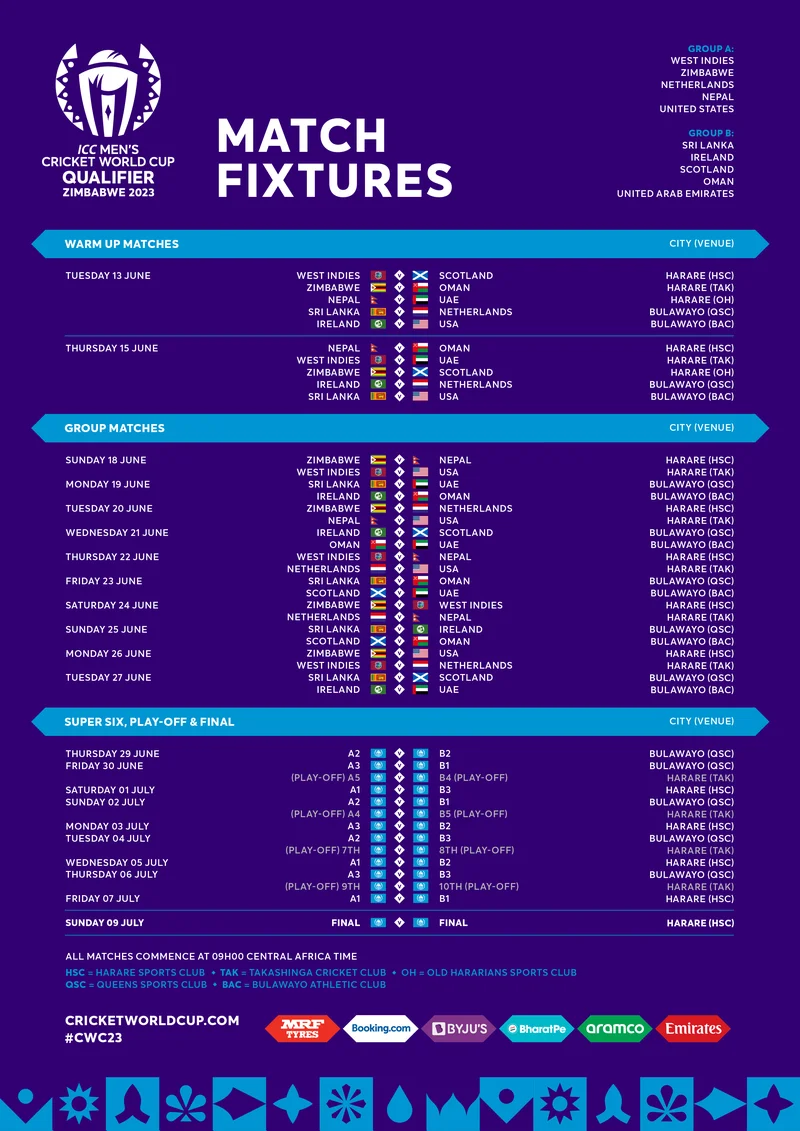
This World Cup is the first major output of that new system. The format is a full round-robin—in simpler terms, it means every single team plays every other team, a true, brutal test of consistency and depth, not just a lucky knockout punch. It’s designed to find the best team, not just the luckiest. And for the first time in history, the entire panel of umpires and match officials will be women. This isn’t just a symbolic gesture. It’s a sign of a mature ecosystem, one that is now producing elite talent in every single vertical, from the pitch to the officiating box.
This reminds me of the early days of broadcast radio. For decades, it was the realm of passionate amateurs and hobbyists. But then, an infrastructure of networks, advertisers, and professional studios was built around it. The talent didn't magically get better; the system designed to identify, nurture, and showcase that talent underwent a phase transition. That’s what we’re seeing here. The passion has always existed; now, it’s being amplified by a professional architecture.
Of course, with this new level of professionalization and investment comes a profound responsibility. The integrity of the system is paramount. We have to ensure that this growth is sustainable, that the investment funnels down to the grassroots, and that we protect the human beings—the athletes at the center of it all—from the immense pressures that this new level of exposure brings.
For years, the narrative around the women’s game was framed by a quiet skepticism, often centered on the dominance of Australia, who have won seven of the twelve previous titles. The implicit question was, "Is the field deep enough?" But this is the wrong way to look at the data. Australia wasn't a sign of weakness in the system; they were the benchmark. They were the high-water mark that the rest of the world was engineering solutions to meet.
And now, the gap is closing. You can see it in the data—Smriti Mandhana scoring the most runs (2100) and Deepti Sharma taking the most wickets (59) of anyone since 2022. You can hear it in the confident words of players like Bangladesh’s Sharmin Akther Supta, who draws strength from her team’s first-ever World Cup win three years ago. The system is learning, adapting, and self-correcting.
This is the beautiful, emergent complexity of it all—the WPL is feeding talent into the international game, the increased schedule is hardening that talent under pressure, the prize money is legitimizing it as a career, and the global `women's cricket world cup streaming` on platforms from Willow TV to Amazon Prime Video is creating a powerful feedback loop with a new generation of fans and players. It's a self-reinforcing cycle of growth, and it’s happening so fast it's almost dizzying—it means the gap between the game we watched yesterday and the one we will watch tomorrow is closing faster than we can even comprehend.
What does this mean for you, watching at home? It means you’re about to witness one of the most competitive and unpredictable tournaments in history. Will Australia, the reigning champions, defend their title? Or will a team like India, armed with unprecedented preparation and home-field advantage, finally seize the crown? Can a veteran like Sri Lanka’s Udeshika Prabodhani or a rising star like Bangladesh’s 17-year-old Nishita Akhter Nishi create a moment of magic?
The beauty of it is, for the first time, the outcome feels genuinely unknown. The system has become too complex, too dynamic, to easily predict. And that is the hallmark of a healthy, thriving ecosystem.
The Blueprint is Live
This isn't just about a single `icc world cup`. This is about the successful deployment of a new operating system for professional women's sport. We are watching a case study in real-time on how to build a global, commercially vibrant, and intensely competitive ecosystem from the ground up. The lessons learned here—about strategic investment, creating high-pressure development leagues, and building a complete talent pipeline—will be the blueprint for others for decades to come. The game has changed because the system that powers it has been rewritten. Welcome to version 2.0.
Reference article source:

- Search
- Recently Published
-
- Duke Energy: What's Really Going On?
- Value City Furniture: Are they finally going out of business? The bankruptcy talk.
- Scott Bessent: Who Is This Guy, The Trump Whispers, And What Are They Not Telling Us?
- American Signature Files Chapter 11: What Happened?
- Tesla Ride-Hail in Arizona: What This Means for the Future of Mobility
- OECD: What it is, and its AI Data Focus
- Nebius: Stock, Coreweave, & Nvidia – What's the Real Deal?
- Bitcoin: Beyond the Headlines, What This Moment Truly Signals
- Social Security Retirement: The Realities of Your Payouts and How to Plan
- Starlink Satellites: How Many Are Really Up There, Where They're Hiding, & What's The Actual Point?
- Tag list
-
- carbon trading (2)
- financial innovation (2)
- blockchain technology (2)
- carbon tokens (2)
- Blockchain (11)
- Decentralization (5)
- Smart Contracts (4)
- Cryptocurrency (26)
- DeFi (5)
- Bitcoin (29)
- Trump (5)
- Ethereum (8)
- Pudgy Penguins (5)
- NFT (5)
- Solana (7)
- cryptocurrency (6)
- XRP (3)
- Airdrop (3)
- MicroStrategy (3)
- Stablecoin (3)
- Digital Assets (3)
- PENGU (3)
- Aster (8)
- Zcash (6)
- iren stock (3)